
Recommended Global Medical Webinars & Conferences
Asia Pacific & Middle East
Tissue Science 2026
- Welcome Message
- About Tissue Science 2026
- Target Audience
- Scientific Sessions & Tracks
- Market Analysis Report
- Past Conference Report
Welcome Message
Dear Distinguished Speakers, Researchers, Academicians, Industry Experts, and Participants,
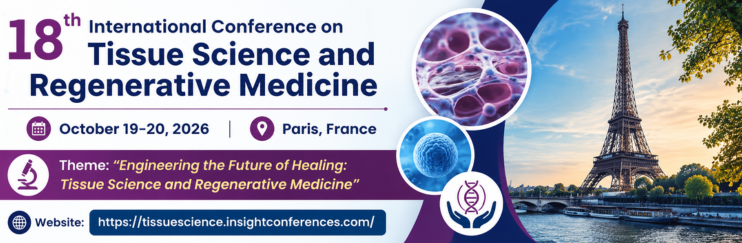
It is our great pleasure to welcome you to the 18th International Conference on Tissue Science and Regenerative Medicine, taking place on October 19–20, 2026, in Paris, France.
This conference brings together leading scientists, healthcare professionals, innovators, and emerging researchers from around the world to explore the latest advancements and transformative discoveries in tissue science, regenerative medicine, stem cell research, biomaterials, tissue engineering, and translational therapies.
Under the theme, “Engineering the Future of Healing: Tissue Science and Regenerative Medicine,” we aim to foster meaningful discussions, encourage interdisciplinary collaboration, and inspire innovative solutions that will shape the future of healthcare and improve patient outcomes worldwide.
Over the course of two days, participants will have the opportunity to engage in keynote presentations, scientific sessions, panel discussions, networking events, and knowledge-sharing activities that highlight cutting-edge research and emerging technologies in the field.
We are honored by your presence and contribution to this important gathering. Your expertise, insights, and commitment to advancing regenerative medicine are essential in driving scientific progress and translating research into real-world therapeutic applications.
We wish you a productive, inspiring, and rewarding conference experience in the beautiful city of Paris. We look forward to the valuable exchanges, new collaborations, and groundbreaking ideas that will emerge from this event.
Welcome to the 18th International Conference on Tissue Science and Regenerative Medicine 2026!
Conference Organizing Committee
18th International Conference on Tissue Science and Regenerative Medicine
October 19–20, 2026 | Paris, France
About Tissue Science 2026
The 18th International Conference on Tissue Science and Regenerative Medicine (Tissue Science 2026) will be held on October 19–20, 2026, in Paris. The conference is dedicated to advancing knowledge and innovation in tissue science, regenerative medicine, stem cell research, tissue engineering, biomaterials, and translational therapeutics.
With the theme “Engineering the Future of Healing: Tissue Science and Regenerative Medicine,” Tissue Science 2026 will serve as a global platform for researchers, clinicians, academicians, biotechnology professionals, healthcare practitioners, and industry leaders to exchange ideas, present groundbreaking research, and explore emerging trends that are shaping the future of regenerative healthcare.
The conference will feature keynote lectures, plenary sessions, oral and poster presentations, workshops, and networking opportunities designed to foster scientific collaboration and promote the translation of laboratory discoveries into clinical applications. Participants will gain insights into the latest developments in stem cell therapies, regenerative biomaterials, organ and tissue regeneration, 3D bioprinting, gene and cell therapies, tissue repair mechanisms, and precision regenerative medicine.
Tissue Science 2026 aims to encourage interdisciplinary dialogue and strengthen partnerships between academia, research institutions, healthcare organizations, and industry stakeholders. By bringing together experts from diverse scientific and medical backgrounds, the conference seeks to accelerate innovation and contribute to the development of next-generation therapeutic solutions that improve patient care and quality of life.
Join us in Paris for two days of scientific excellence, knowledge sharing, and collaboration as we explore the future of tissue science and regenerative medicine and work together to engineer new possibilities for healing and healthcare advancement.
Why Attend Tissue Science 2026?
Attending the 18th International Conference on Tissue Science and Regenerative Medicine (Tissue Science 2026) offers a unique opportunity to engage with leading experts, discover groundbreaking research, and contribute to the future of regenerative healthcare.
- Learn about the latest breakthroughs in tissue science, regenerative medicine, and stem cell research.
- Gain insights from renowned international speakers and leading experts.
- Present your research and receive constructive feedback from peers.
- Network with researchers, clinicians, academicians, and industry professionals from around the world.
- Discover emerging technologies in tissue engineering, biomaterials, and regenerative therapies.
- Explore innovations in 3D bioprinting, gene therapy, and cell-based treatments.
- Build collaborations for future research projects and funding opportunities.
- Stay updated on current trends, challenges, and advancements in regenerative healthcare.
- Enhance your professional knowledge and scientific expertise.
- Publish and showcase your work to a global audience.
- Participate in interactive discussions, workshops, and scientific sessions.
- Connect academia, clinical practice, and industry under one platform.
- Learn about translational research and clinical applications of regenerative medicine.
- Expand your international professional network.
- Experience a world-class scientific event in Paris.
- Contribute to innovations that are shaping the future of healing and healthcare.
Join Tissue Science 2026 and be part of the global movement advancing regenerative medicine and tissue engineering.
Target Audience
The 18th International Conference on Tissue Science and Regenerative Medicine (Tissue Science 2026) welcomes a diverse audience from academia, healthcare, research institutions, and industry, including:
- Tissue Scientists and Researchers
- Regenerative Medicine Specialists
- Stem Cell Researchers
- Tissue Engineering Professionals
- Cell and Molecular Biologists
- Biomedical Scientists
- Biomaterials Researchers
- Clinical Researchers and Physicians
- Surgeons and Healthcare Practitioners
- Biotechnology and Pharmaceutical Professionals
- Biomedical Engineers
- Translational Medicine Experts
- Gene and Cell Therapy Researchers
- 3D Bioprinting and Biofabrication Specialists
- Immunology and Developmental Biology Researchers
- Laboratory Scientists and Technicians
- Academic Faculty and Professors
- Postdoctoral Fellows and Research Scholars
- Graduate and Undergraduate Students
- Healthcare Industry Leaders and Innovators
- Medical Device and Biotechnology Companies
- Regulatory Affairs and Quality Assurance Professionals
- Research Institutes and Government Organizations
- Investors and Entrepreneurs in Life Sciences
- Scientific Associations and Professional Societies
Tissue Science 2026 provides an ideal platform for professionals and emerging researchers to exchange knowledge, foster collaborations, and explore the latest innovations in tissue science and regenerative medicine.
Scientific Sessions & Tracks
Stem cell biology has become a cornerstone of regenerative medicine, offering remarkable opportunities to repair, replace, and regenerate damaged tissues and organs. This session will explore the latest advances in stem cell research, including embryonic stem cells, adult stem cells, mesenchymal stem cells, induced pluripotent stem cells (iPSCs), and tissue-specific progenitor cells. Participants will gain insights into the molecular mechanisms that regulate stem cell self-renewal, differentiation, and tissue regeneration, as well as emerging technologies that enhance their therapeutic potential. The session will highlight recent breakthroughs in stem cell-based therapies for cardiovascular, neurological, orthopedic, and metabolic disorders, while also addressing challenges related to clinical translation, manufacturing, scalability, safety, ethics, and regulatory compliance. Discussions will showcase how stem cells are being integrated with gene editing, biomaterials, tissue engineering, and personalized medicine approaches to create innovative regenerative treatments. Bringing together researchers, clinicians, industry leaders, and healthcare professionals, this session aims to foster collaboration, accelerate scientific discovery, and advance the development of safe and effective stem cell therapies that are transforming the future of healthcare and improving patient outcomes worldwide.
Session 02: Tissue Engineering and Regenerative Strategies
Tissue engineering and regenerative strategies represent a rapidly evolving field that integrates biology, engineering, biomaterials, and clinical sciences to develop innovative solutions for repairing, replacing, and regenerating damaged tissues and organs. This session will explore the latest advancements in scaffold design, biomaterial development, tissue fabrication techniques, and regenerative therapies that support tissue restoration and functional recovery. Participants will gain insights into the role of stem cells, growth factors, extracellular matrix interactions, and bioactive molecules in promoting tissue regeneration and enhancing therapeutic outcomes. The session will also highlight emerging technologies such as 3D bioprinting, biofabrication, organ-on-a-chip systems, and personalized tissue engineering approaches that are transforming regenerative medicine. Discussions will cover applications in bone, cartilage, skin, cardiovascular, neural, and organ regeneration, along with challenges related to clinical translation, manufacturing, regulatory requirements, and commercialization. Bringing together researchers, biomedical engineers, clinicians, and industry professionals, this session aims to foster interdisciplinary collaboration, showcase groundbreaking innovations, and accelerate the development of next-generation regenerative solutions that improve patient care and advance the future of healthcare.
Session 03: Biomaterials and Bioactive Scaffolds
Biomaterials and bioactive scaffolds play a fundamental role in tissue engineering and regenerative medicine by providing structural support and biological cues that facilitate cell growth, tissue repair, and functional regeneration. This session will focus on the design, development, and application of advanced biomaterials, including natural polymers, synthetic materials, hydrogels, nanomaterials, and smart biomaterials engineered to mimic the native tissue microenvironment. Participants will explore how bioactive scaffolds influence cellular behavior, promote tissue integration, and enhance regenerative outcomes through controlled delivery of growth factors, drugs, and signaling molecules. The session will highlight recent innovations in scaffold fabrication techniques, biomaterial surface modification, biodegradable materials, and responsive biomaterials capable of adapting to physiological conditions. Discussions will also cover applications in bone, cartilage, skin, neural, cardiovascular, and organ tissue regeneration, as well as challenges related to biocompatibility, mechanical performance, long-term functionality, and clinical translation. Bringing together materials scientists, biomedical engineers, clinicians, and regenerative medicine researchers, this session aims to showcase emerging technologies and foster collaborations that advance the development of next-generation biomaterials and scaffold-based therapies for improved healthcare outcomes.
Session 04: 3D Bioprinting and Biofabrication
3D bioprinting and biofabrication represent revolutionary technologies in tissue science and regenerative medicine, enabling the precise layer-by-layer construction of living tissues, organ structures, and biomimetic scaffolds using cells, biomaterials, and bioinks. This session will focus on the latest advancements in bioprinting techniques, bioink formulation, and fabrication strategies that are transforming the way functional tissues are designed and developed. Participants will explore how 3D bioprinting is being applied to create complex tissue architectures such as skin, cartilage, bone, vascular networks, and organ-like constructs with improved structural and functional fidelity. The session will also highlight innovations in bioprinter technologies, computer-aided design (CAD) integration, and tissue modeling approaches that enhance precision and reproducibility. Key discussions will include the role of stem cells in biofabrication, vascularization challenges, mechanical stability of printed tissues, and scalability for clinical applications. Emerging applications such as personalized tissue constructs, organ-on-demand systems, and drug testing platforms will also be addressed. Additionally, the session will examine regulatory, ethical, and translational challenges associated with bringing bioprinted tissues from the laboratory to clinical practice. By bringing together researchers, engineers, clinicians, and industry leaders, this session aims to accelerate innovation and collaboration in the rapidly advancing field of 3D bioprinting and biofabrication, paving the way for next-generation regenerative therapies.
Session 05: Cell Therapy and Translational Medicine
Cell therapy and translational medicine are at the forefront of regenerative healthcare, focusing on the development and clinical application of living cells to treat, repair, or replace damaged tissues and restore normal biological function. This session will explore the latest advancements in cell-based therapies, including stem cell transplantation, immune cell therapies, and engineered cellular products designed for precision medicine applications. Participants will gain insights into how cells are isolated, modified, expanded, and delivered to target diseases such as cancer, cardiovascular disorders, neurological conditions, autoimmune diseases, and degenerative disorders. The session will also highlight the critical role of translational medicine in bridging laboratory discoveries with clinical practice, emphasizing preclinical studies, clinical trial design, regulatory pathways, and patient safety considerations. Discussions will cover manufacturing scalability, quality control, Good Manufacturing Practice (GMP) standards, and challenges associated with commercialization and global approval of cell-based products. Emerging technologies such as gene-edited cell therapies, CAR-T and CAR-NK cells, and combination approaches with biomaterials and drug delivery systems will also be addressed. By bringing together scientists, clinicians, regulatory experts, and industry professionals, this session aims to accelerate the translation of innovative cell therapies into safe, effective, and accessible treatments that transform modern medicine and improve patient outcomes worldwide.
Session 06: Gene Therapy and Genome Engineering
Gene therapy and genome engineering represent transformative approaches in regenerative medicine that aim to correct, replace, or regulate defective genes responsible for a wide range of inherited and acquired diseases. This session will explore the latest advancements in gene delivery systems, including viral vectors, non-viral carriers, nanoparticles, and advanced genome editing tools such as CRISPR-Cas systems, base editing, and prime editing technologies. Participants will gain insights into how precise genetic modifications are being used to develop novel therapies for genetic disorders, cancer, neurodegenerative diseases, cardiovascular conditions, and metabolic syndromes. The session will also highlight the integration of gene therapy with stem cell technology and tissue engineering to enhance regenerative outcomes and achieve long-term therapeutic benefits. Key discussions will include challenges related to targeting efficiency, off-target effects, immune responses, safety concerns, ethical considerations, and regulatory frameworks governing gene-based interventions. Advances in personalized gene therapy, precision medicine approaches, and in vivo versus ex vivo gene editing strategies will also be addressed. By bringing together researchers, clinicians, bioengineers, and industry experts, this session aims to foster collaboration and innovation, accelerating the development of safe, effective, and next-generation gene and genome engineering therapies that have the potential to revolutionize modern healthcare.
Session 07: Organ Regeneration and Artificial Organs
Organ regeneration and artificial organs represent one of the most ambitious and rapidly advancing areas of regenerative medicine, focusing on restoring or replacing the function of damaged or failing organs. This session will explore cutting-edge research in organ regeneration, including organoid technology, decellularization and recellularization techniques, bioengineered organ constructs, and stem cell–based approaches for functional tissue restoration. Participants will gain insights into the biological mechanisms of organ development, repair, and regeneration, as well as innovative strategies used to recreate complex organ structures such as the liver, kidney, heart, and lungs. The session will also highlight advances in artificial organs, including bioartificial devices, implantable support systems, and hybrid bioelectronic constructs designed to mimic or enhance natural organ function. Key discussions will address challenges such as vascularization, immune compatibility, functional integration, long-term viability, and scalability for clinical use. Emerging technologies such as organ-on-chip platforms, bioprinting of whole organs, and personalized organ replacement strategies will also be explored. By bringing together researchers, clinicians, engineers, and industry leaders, this session aims to accelerate interdisciplinary collaboration and innovation, paving the way for next-generation organ regeneration therapies and artificial organ solutions that can transform the treatment of organ failure and improve patient survival worldwide.
Session 08: Regenerative Medicine in Orthopedics
Regenerative medicine in orthopedics focuses on restoring the structure and function of musculoskeletal tissues affected by injury, degeneration, or disease, offering advanced alternatives to conventional surgical and pharmacological treatments. This session will explore the latest developments in bone regeneration, cartilage repair, tendon and ligament healing, and musculoskeletal tissue engineering using stem cells, biomaterials, and bioactive molecules. Participants will gain insights into how mesenchymal stem cells, growth factors, and scaffold-based therapies are being applied to enhance tissue repair and accelerate recovery in orthopedic conditions. The session will also highlight innovations in joint regeneration, spinal repair, sports injury treatment, and osteoarthritis management, with a strong emphasis on translational and clinical applications. Emerging technologies such as 3D-printed orthopedic implants, injectable biomaterials, platelet-rich plasma (PRP) therapies, and gene-enhanced tissue regeneration will also be discussed. Key challenges including mechanical strength, long-term durability, immune response, and regulatory approval pathways will be addressed. By bringing together orthopedic surgeons, biomedical engineers, researchers, and industry experts, this session aims to promote interdisciplinary collaboration and advance next-generation regenerative therapies that improve mobility, function, and quality of life for patients with musculoskeletal disorders.
Session 09: Cardiovascular Regenerative Medicine
Cardiovascular regenerative medicine focuses on repairing and regenerating damaged heart and vascular tissues to address the growing global burden of cardiovascular diseases, including heart failure, myocardial infarction, and vascular disorders. This session will explore the latest advances in cardiac tissue engineering, vascular regeneration, and stem cell–based therapies designed to restore normal cardiovascular function. Participants will gain insights into the use of mesenchymal stem cells, cardiac progenitor cells, induced pluripotent stem cells (iPSCs), and bioengineered grafts for repairing heart muscle and blood vessels. The session will also highlight innovations in biomaterial scaffolds, extracellular matrix–based therapies, and growth factor delivery systems that support cardiac repair and angiogenesis. Emerging technologies such as engineered heart tissues, 3D bioprinted cardiac patches, organ-on-chip cardiovascular models, and gene editing approaches for heart disease treatment will also be discussed. Key challenges including tissue integration, electrical conductivity, vascularization, immune response, and long-term functionality will be addressed. Translational aspects such as clinical trials, regulatory pathways, and scalability of cardiovascular therapies will also be emphasized. By bringing together cardiologists, biomedical researchers, bioengineers, and industry professionals, this session aims to accelerate innovation and collaboration in developing next-generation regenerative solutions that can reduce mortality and improve outcomes in cardiovascular disease patients worldwide.
Session 10: Neural Regeneration and Neuroengineering
Neural regeneration and neuroengineering focus on restoring the structure and function of the nervous system following injury, degeneration, or disease, offering promising approaches for conditions that currently have limited treatment options. This session will explore the latest advancements in neural stem cell biology, nerve tissue engineering, and brain repair strategies aimed at treating neurodegenerative disorders such as Alzheimer’s disease, Parkinson’s disease, spinal cord injuries, and stroke. Participants will gain insights into the mechanisms of neural development, axonal growth, synaptic regeneration, and neuroplasticity, which are essential for functional recovery in the central and peripheral nervous systems. The session will also highlight innovations in biomaterial scaffolds, neurotrophic factor delivery, and electrical stimulation techniques that support neural regeneration and functional restoration. Emerging technologies such as brain organoids, neural interfaces, neuroprosthetics, and bioelectronic medicine will also be discussed. Key challenges including limited regenerative capacity of neural tissue, immune response, precise neural circuit reconstruction, and clinical translation will be addressed. By bringing together neuroscientists, biomedical engineers, clinicians, and industry experts, this session aims to foster interdisciplinary collaboration and accelerate the development of next-generation neuroregenerative therapies that improve quality of life for patients with neurological disorders.
Session 11: Wound Healing and Skin Regeneration
Wound healing and skin regeneration focus on restoring the integrity and function of skin tissue following injury, burns, chronic wounds, or surgical interventions. This session will explore the latest advancements in skin tissue engineering, chronic wound management, and regenerative dermatology, including the use of stem cells, growth factors, and bioengineered skin substitutes. Participants will gain insights into the biological phases of wound healing—hemostasis, inflammation, proliferation, and remodeling—and how these processes can be enhanced through modern regenerative approaches. The session will also highlight innovations in advanced wound dressings, hydrogel-based systems, nanomaterial coatings, and bioactive scaffolds designed to accelerate healing and reduce infection risk. Emerging therapies such as cell-based skin grafts, platelet-rich plasma (PRP), exosome therapy, and 3D-bioprinted skin constructs will also be discussed. Key challenges including scar formation, infection control, vascularization, and long-term tissue integration will be addressed. By bringing together dermatologists, researchers, biomedical engineers, and industry experts, this session aims to advance next-generation wound care and skin regeneration strategies that improve recovery outcomes and patient quality of life.
Session 12: Immunology and Regenerative Medicine
Immunology plays a crucial role in tissue repair and regenerative medicine, as immune responses can either support or hinder healing processes. This session will explore the complex interactions between the immune system and regenerating tissues, focusing on how immune modulation can enhance repair and reduce inflammation-related damage. Participants will gain insights into macrophage polarization, inflammation control, immune cell signaling, and the role of cytokines and chemokines in tissue regeneration. The session will also highlight emerging approaches such as immunoengineering, immune cell therapies, and biomaterial-based immune modulation strategies designed to create a pro-regenerative environment. Discussions will include the integration of stem cells with immune-modulating therapies, transplantation immunology, and strategies to prevent graft rejection in regenerative treatments. Key challenges such as immune compatibility, chronic inflammation, and balancing immune activation and suppression will also be addressed. By bringing together immunologists, regenerative medicine researchers, clinicians, and bioengineers, this session aims to strengthen interdisciplinary collaboration and advance immune-informed regenerative therapies for improved clinical outcomes.
Session 13: Nanotechnology in Tissue Science
Nanotechnology is revolutionizing tissue science and regenerative medicine by enabling precise control over biological systems at the molecular and cellular level. This session will explore the latest developments in nanomedicine, including nanoparticle-based drug delivery systems, nanoscale biomaterials, and engineered nanostructures that enhance tissue repair and regeneration. Participants will gain insights into how nanomaterials interact with cells and tissues to influence healing, improve therapeutic targeting, and support controlled release of bioactive agents. The session will also highlight applications of nanotechnology in cancer therapy, wound healing, bone regeneration, and neural repair. Emerging innovations such as smart nanoparticles, nanofibers, exosome-inspired nanocarriers, and diagnostic nanodevices will also be discussed. Key challenges including toxicity, biocompatibility, regulatory concerns, and large-scale manufacturing will be addressed. By bringing together nanotechnologists, biomedical scientists, clinicians, and industry leaders, this session aims to accelerate the development of safe and effective nano-enabled regenerative therapies that transform modern healthcare.
Session 14: Precision and Personalized Regenerative Medicine
Precision and personalized regenerative medicine focuses on developing patient-specific therapies tailored to individual genetic, molecular, and clinical profiles. This session will explore how advances in genomics, proteomics, biomarker discovery, and bioinformatics are enabling highly targeted regenerative treatments. Participants will gain insights into personalized stem cell therapies, customized biomaterials, and data-driven approaches that optimize tissue repair and therapeutic outcomes. The session will also highlight the integration of artificial intelligence, machine learning, and digital health technologies in predicting treatment responses and designing individualized regenerative strategies. Discussions will include organ-specific precision therapies, disease modeling, and the role of patient-derived cells in creating personalized tissue constructs. Key challenges such as data privacy, regulatory approval, cost-effectiveness, and clinical implementation will also be addressed. By bringing together clinicians, researchers, data scientists, and industry experts, this session aims to drive innovation in tailored regenerative healthcare solutions that improve efficacy and patient outcomes.
Session 15: Future Trends and Emerging Innovations
Future trends and emerging innovations in tissue science and regenerative medicine are shaping the next era of healthcare by integrating advanced technologies and interdisciplinary approaches. This session will explore cutting-edge developments such as artificial intelligence-driven tissue engineering, digital twin models for human biology, robotics in regenerative surgery, and next-generation bioprinting technologies. Participants will gain insights into how emerging tools are accelerating discovery, improving clinical translation, and enabling predictive and preventive regenerative medicine. The session will also highlight innovations in synthetic biology, bioelectronics, organ regeneration technologies, and automated laboratory systems that are transforming research and clinical practice. Discussions will include the future of personalized medicine, global healthcare accessibility, and ethical considerations surrounding advanced regenerative technologies. Key challenges such as scalability, affordability, regulatory frameworks, and clinical adoption will be addressed. By bringing together visionaries from science, engineering, medicine, and industry, this session aims to inspire forward-thinking collaborations that define the future of regenerative medicine and reshape global healthcare systems.
Session 16: Young Researchers Forum
The Young Researchers Forum is dedicated to providing an interactive platform for early-career scientists, postgraduate students, and emerging scholars to present their innovative research in tissue science and regenerative medicine. This session will encourage the exchange of fresh ideas, novel findings, and experimental approaches across diverse areas including stem cell research, biomaterials, tissue engineering, and regenerative therapies. Participants will have the opportunity to present oral and poster presentations, receive constructive feedback from experts, and engage in meaningful scientific discussions. The session will also focus on skill development, research methodology, academic writing, and career advancement opportunities in biomedical sciences. Mentorship from senior researchers and industry professionals will be a key feature, helping young scientists build confidence and expand their professional networks. By fostering a supportive and collaborative environment, this session aims to nurture the next generation of innovators who will drive the future of regenerative medicine.
Session 17: Industry Perspectives and Commercialization
This session focuses on bridging the gap between scientific discovery and market-ready regenerative medicine solutions. It will explore the industrial landscape of tissue science, including biotechnology startups, pharmaceutical developments, and medical device innovations. Participants will gain insights into technology transfer processes, intellectual property management, regulatory strategies, and commercialization pathways for regenerative therapies. The session will also highlight challenges in scaling up laboratory innovations into viable clinical and commercial products, including manufacturing standards, cost considerations, and global market access. Discussions will include public-private partnerships, venture capital funding, and entrepreneurship opportunities in life sciences. Case studies of successful commercialization of regenerative technologies will be presented to provide practical insights. By bringing together researchers, investors, industry leaders, and policymakers, this session aims to promote innovation-driven growth and accelerate the translation of regenerative medicine from bench to market.
Session 18: Regulatory Affairs and Clinical Challenges
Regulatory affairs and clinical challenges play a critical role in ensuring the safety, efficacy, and quality of regenerative medicine products. This session will examine global regulatory frameworks governing stem cell therapies, gene editing technologies, biomaterials, and tissue-engineered products. Participants will gain insights into clinical trial design, ethical approval processes, Good Manufacturing Practice (GMP) compliance, and post-market surveillance requirements. The session will also address key challenges such as regulatory harmonization across countries, approval timelines, and safety assessment of advanced therapies. Discussions will include risk management strategies, patient safety considerations, and evolving guidelines for novel regenerative technologies. By bringing together regulatory experts, clinicians, researchers, and industry professionals, this session aims to facilitate a clearer understanding of the regulatory landscape and support the smooth translation of innovative therapies into clinical practice.
Session 19: Women in Regenerative Medicine
The Women in Regenerative Medicine session celebrates and promotes the contributions of women scientists, clinicians, and leaders in the field of tissue science and regenerative medicine. This session will focus on leadership development, gender equity, mentorship opportunities, and career advancement for women in biomedical research and healthcare innovation. Participants will hear inspiring talks from leading women professionals who have made significant contributions to stem cell research, tissue engineering, and translational medicine. The session will also address challenges faced by women in science, including representation gaps, work-life balance, and career progression barriers. Discussions will highlight initiatives that promote diversity, inclusion, and equal opportunities in research and industry. By fostering an inclusive and empowering environment, this session aims to support the growth of women leaders and strengthen their impact on the future of regenerative medicine.
Session 20: Innovations in Tissue Science and Regenerative Medicine
This final session showcases the most groundbreaking discoveries and transformative innovations shaping the future of tissue science and regenerative medicine. It will highlight novel therapeutic strategies, emerging research breakthroughs, and interdisciplinary approaches that are redefining regenerative healthcare. Participants will explore advances in stem cell engineering, biofabrication, synthetic tissues, organ regeneration, and next-generation biomaterials. The session will also emphasize the integration of artificial intelligence, robotics, and digital health technologies in accelerating biomedical innovation. Key discussions will address the translation of research into clinical applications, global healthcare impact, and future directions for regenerative medicine. By bringing together leading scientists, clinicians, and industry pioneers, this session aims to inspire visionary thinking and foster collaborations that will drive the next era of healing and medical transformation.
Market Analysis Report
The global tissue science and regenerative medicine market is witnessing strong expansion due to rising demand for advanced therapeutic solutions, increasing prevalence of chronic diseases, and rapid progress in stem cell therapy, gene editing, and tissue engineering. As of 2025, the market is estimated to be valued at approximately USD 25–35 billion, driven by growing clinical adoption of regenerative therapies in orthopedics, cardiology, neurology, and wound healing applications. Increasing investments from biotechnology companies, pharmaceutical firms, and government research programs are accelerating innovation in areas such as 3D bioprinting, biomaterials, and personalized regenerative medicine.
Looking ahead, the market is projected to reach approximately USD 85–120 billion by 2032–2033, expanding at a strong compound annual growth rate (CAGR) of around 15%–18% (2026–2033). This growth is supported by continuous advancements in gene therapy technologies such as CRISPR, increasing number of clinical trials for stem cell–based treatments, and rising demand for organ regeneration solutions. North America is expected to maintain market leadership, while the Asia-Pacific region is anticipated to witness the fastest growth due to expanding healthcare infrastructure, biotech investments, and supportive government initiatives.
Despite strong growth potential, the market faces challenges such as high treatment costs, complex regulatory approvals, ethical concerns in stem cell research, and scalability issues in manufacturing advanced therapies. However, the future outlook remains highly promising as emerging technologies like AI-driven regenerative medicine, organoids, biofabrication, and personalized cell therapies continue to mature. By 2033 and beyond, regenerative medicine is expected to become a mainstream component of healthcare, transforming treatment approaches from disease management to true tissue and organ regeneration.
Key Scientific Associations and Societies
- International Society for Stem Cell Research (ISSCR)
- Tissue Engineering and Regenerative Medicine International Society (TERMIS)
- International Society for Cellular Therapy (ISCT)
- European Society for Biomaterials (ESB)
- American Society for Regenerative Medicine (ASRM)
- International Federation for Adipose Therapeutics and Science (IFATS)
- Society for Biomaterials (SFB)
- International Society for Biofabrication (ISBF)
- European Society for Gene and Cell Therapy (ESGCT)
- Global Alliance for Regenerative Medicine (GARM)
Participation Options – Tissue Science 2026
The 18th International Conference on Tissue Science and Regenerative Medicine (Tissue Science 2026) offers multiple participation opportunities for researchers, clinicians, academicians, and industry professionals to engage in scientific exchange and collaboration.
1. Oral Presentation
- Present your original research in front of an international audience
- Share findings in stem cell science, tissue engineering, biomaterials, and regenerative medicine
- Receive expert feedback and engage in scientific discussion
2. Poster Presentation
- Display your research in a visual poster format
- Interact directly with delegates and experts
- Ideal for students, early-career researchers, and ongoing studies
3. Virtual Presentation
- Participate remotely from anywhere in the world
- Present via live or recorded video sessions
- Access global networking opportunities without travel
4. Listener / Delegate Participation
- Attend scientific sessions without presenting research
- Gain insights into latest advancements in regenerative medicine
- Network with global experts and industry professionals
5. Workshop Participation
- Join specialized training sessions and hands-on workshops
- Learn advanced techniques in tissue science and regenerative technologies
- Enhance practical knowledge and technical skills
6. Young Researcher Participation
- Designed for students, PhD scholars, and early-career scientists
- Opportunity to showcase innovation and receive mentorship
- Participate in Young Researchers Forum sessions
7. Industry Participation / Exhibitor
- Biotechnology, pharmaceutical, and medical device companies can showcase products
- Explore collaboration opportunities with researchers and institutions
- Promote innovations in regenerative medicine technologies
8. Speaker / Invited Speaker
- Present keynote or invited talks on advanced research topics
- Share expertise with a global scientific audience
- Contribute to shaping future directions in the field
Abstract & Registration Deadlines – Tissue Science 2026
- Abstract Submission Deadline: October 05, 2026
- Acceptance Notification: Within 2–3 days after submission
- Early Bird Registration: May 19, 2026
- Regular Registration Deadline: September 18, 2026
- Final Registration Deadline: October 19, 2026
Contact Us – Tissue Science 2026
For any queries regarding registration, abstracts, participation, or conference details, please feel free to contact us:
- Phone: +44 2880 090 0005
- Email: contact@speakermeeting.com
Our organizing team will be happy to assist you with all conference-related information and support.
Past Conference Report
Tissue Science 2025
Dear Colleagues and Participants,
On behalf of the Organizing Committee, we are delighted to welcome you to Tissue Science 2025, the 17th International Conference on Tissue Science and Regenerative Medicine, taking place on October 13-14, 2025, in the beautiful city of Rome, Italy.
This conference provides a unique platform for researchers, clinicians, and industry experts from around the world to share innovative research, exchange ideas, and explore the latest advancements in tissue science and regenerative medicine. Attendees will have the opportunity to participate in keynote presentations, plenary sessions, interactive workshops, and poster presentations, designed to foster collaboration and knowledge sharing.
Tissue Science 2025 aims to highlight emerging technologies, novel therapeutic strategies, and clinical applications that are shaping the future of regenerative medicine. Participants will also gain insights into translational research, industry trends, and innovative approaches that bridge the gap between laboratory discoveries and patient care.
We encourage active engagement and networking throughout the conference, providing opportunities to form meaningful partnerships, exchange expertise, and contribute to the advancement of this dynamic field. Whether you are an experienced professional, early-career researcher, or student, Tissue Science 2025 promises a stimulating environment for learning and collaboration.
We look forward to welcoming you to Rome and to an inspiring two days of scientific exploration, professional growth, and international collaboration. Your participation will play a vital role in making this conference a successful and memorable event.
Warm regards,
Organizing Committee
Tissue Science 2025
October 13-14, 2025 | Rome, Italy
Website: https://tissuescience.insightconferences.com/
Past Reports Gallery
To Collaborate Scientific Professionals around the World
Conference Date October 19-20, 2026
For Sponsors & Exhibitors
Speaker Opportunity
Useful Links
Supported By
All accepted abstracts will be published in respective Conference Series International Journals.
Abstracts will be provided with Digital Object Identifier by